
How to build a citation list you can audit
Choose the required citation system, capture source and version metadata, verify identifiers, format from clean records and match every entry to its use.
Start by identifying the exact style, edition, citation system and required list type. A reference list or works-cited list normally records sources used in the work; a bibliography may also include relevant background sources, depending on the rules. For each source, capture its creator roles and order, date, title, containing work, edition or version, publisher, page or item location and persistent identifier from the source or its authoritative record. Correct that metadata before applying a style, verify every DOI or URL, and run a two-way match between the finished document and list. A citation generator can format supplied metadata; it cannot prove that the record describes the source you actually used or that the source supports your claim.
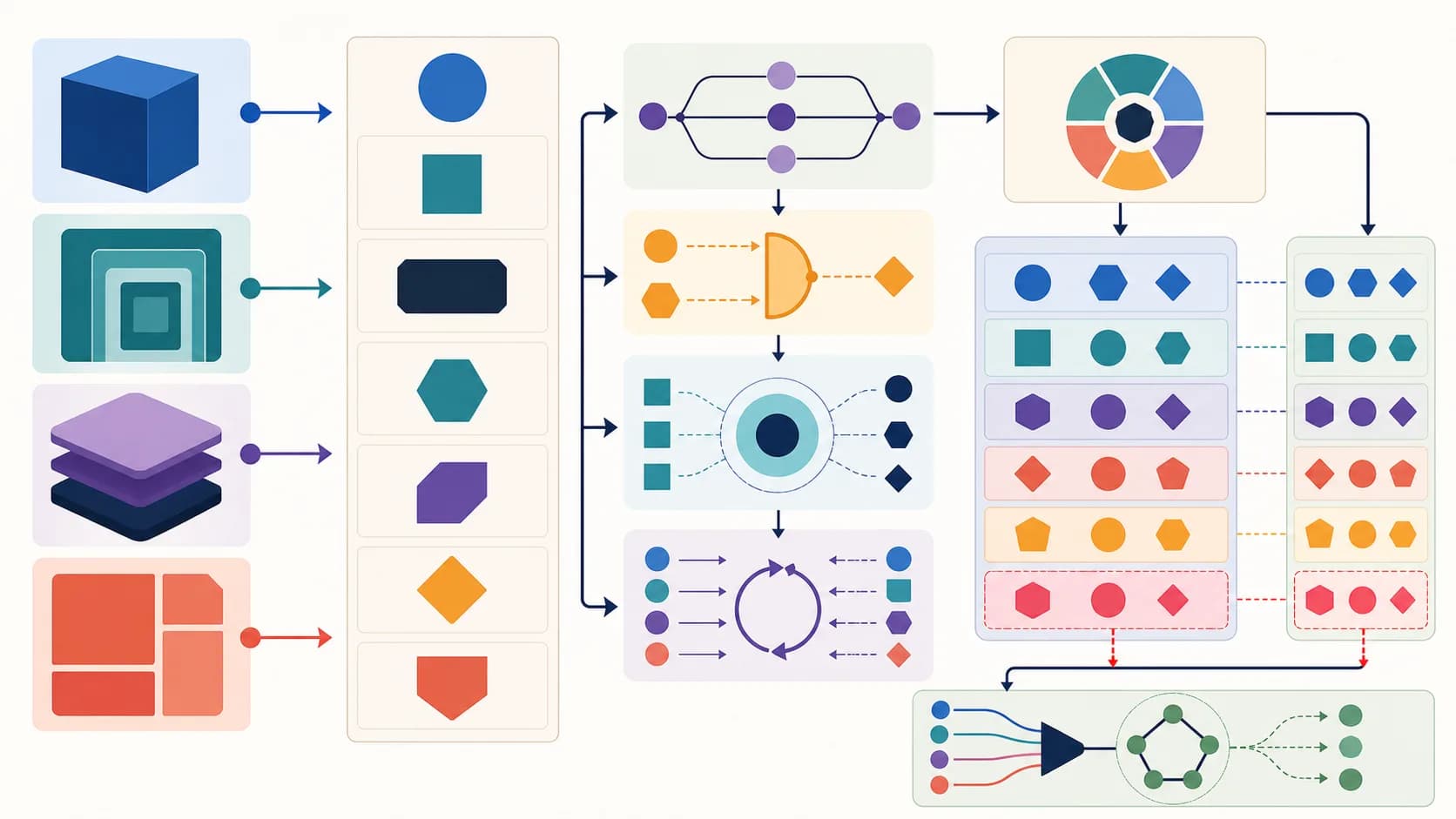
Choose the authority, system and list before formatting
Record the destination's required guide, edition and local overrides before collecting punctuation examples. APA, MLA and Chicago are not interchangeable, and Chicago currently offers both notes-and-bibliography and author-date systems. The list label also carries meaning: works cited and reference lists usually correspond to cited material, while a bibliography may include additional reading when the governing rules permit it. Use the instructor, journal, institution or publisher requirement first, then consult the current official guide rather than copying a nearby paper whose edition and exceptions are unknown.
- Name the style and edition or revision date.
- Record notes, numeric or author-date in-text behavior.
- Confirm whether the output is works cited, references or a bibliography.
- Capture any destination-specific exceptions before drafting entries.
Build one source record from the item you used
Open the cited edition, version or landing page and record the source type; creators in displayed order and their roles; full title and subtitle; container; publisher; publication or update date; edition, version or report number; volume, issue and page or item location; language; and identifier. A chapter and its book, an article and its journal, or a page and its site are separate layers. MLA's current quick guide describes this as a source within a container. Do not infer a personal author from a site owner, turn a search result date into a publication date, or invent a missing field so the entry looks complete.
Preserve the version and normalize the stable location
Cite the version that supplied the evidence, not automatically the newest item with a similar title. Distinguish a preprint from the version of record, an edition from a reprint, a mutable page from an archived snapshot and a dataset or software release from its project home. Resolve the identifier and confirm that its landing-page creators, title and version match your record. Crossref's display guidance calls for Crossref DOIs as full HTTPS URLs in the form https://doi.org/10.xxxx/xxxxx and favors the persistent DOI link over a changing publisher URL. Do not fabricate a DOI, retain an obsolete identifier as though it named the current work or include competing locations unless the required style asks for them.
Correct metadata first, then render one style consistently
Store clean, source-level facts and let the selected style determine name order, capitalization, italics, punctuation, creator truncation, date placement and sorting. Citation software can import and render records, but its output inherits upstream mistakes. Zotero's current documentation warns that imported metadata can be incomplete or incorrect and instructs users to verify saved items; it also recommends correcting library data rather than trusting a generated string. If a field is genuinely absent, follow the style's missing-data rule. Do not paste a guessed value or manually patch one rendered entry in a way that will disappear on the next refresh.
Run source, link, match and presentation audits
Reopen each source and compare the rendered entry with the item actually used. Test DOI and URL destinations, check name spelling and order, dates, titles, versions and locators, merge true duplicate records and preserve distinct versions when both are cited. Then scan both directions: every in-text marker or note must reach the correct full entry, and every list entry must have the use its list type requires. Respect style-specific exceptions such as material cited only in notes. Apply hanging indents and spacing with paragraph styles rather than typed tabs, keep live links operable in digital output, and review the exported PDF or HTML—not only the reference manager preview.
Check the primary references
Check the source against the result
Original MCXAI audit exercise — A fictional technical memo cites (Bray 2017) and (Tennison, Kellogg, and Herman 2015). Its library contains RFC 7159 and RFC 8259 as separate records, but the memo relies on the current RFC 8259 text; that document states that it obsoletes RFC 7159. The second source is the dated W3C Recommendation published 17 December 2015, not an undated latest-version page. Fictional house rule: use author-date markers, list all creators in the full entry, place the year after creators, name the document and version, and finish with the persistent location. This exercise is not presented as APA, MLA or Chicago formatting.
Bray, Tim, editor. 2017. “The JavaScript Object Notation (JSON) Data Interchange Format.” RFC 8259. RFC Editor. https://doi.org/10.17487/RFC8259. — Tennison, Jeni, Gregg Kellogg, and Ivan Herman. 2015. “Model for Tabular Data and Metadata on the Web.” W3C Recommendation, December 17, 2015. https://www.w3.org/TR/2015/REC-tabular-data-model-20151217/.
The audit removes RFC 7159 from this list because the memo does not cite that earlier record, retains RFC 8259's full resolvable DOI URL, and keeps the W3C dated-version URL because that is the version used. Both in-text markers have one full entry and neither entry is unmatched. The surrounding memo and house rule are fictional; the two standards' creator, date, version and location metadata were checked on their primary records, and the result is not claimed to implement any named citation style.
Keep source handling inside a reviewed writing workflow
MCXAI does not publish a citation generator or promise that an automatic format is authoritative. Use the Writing hub for related summarizing and editing methods, then follow the required style's current official guidance.
Explore Writing tools