
How to check grammar one system at a time
Finish structural revision, define the applicable convention, inspect one error class per pass, keep an issue ledger and review every automated suggestion in context.
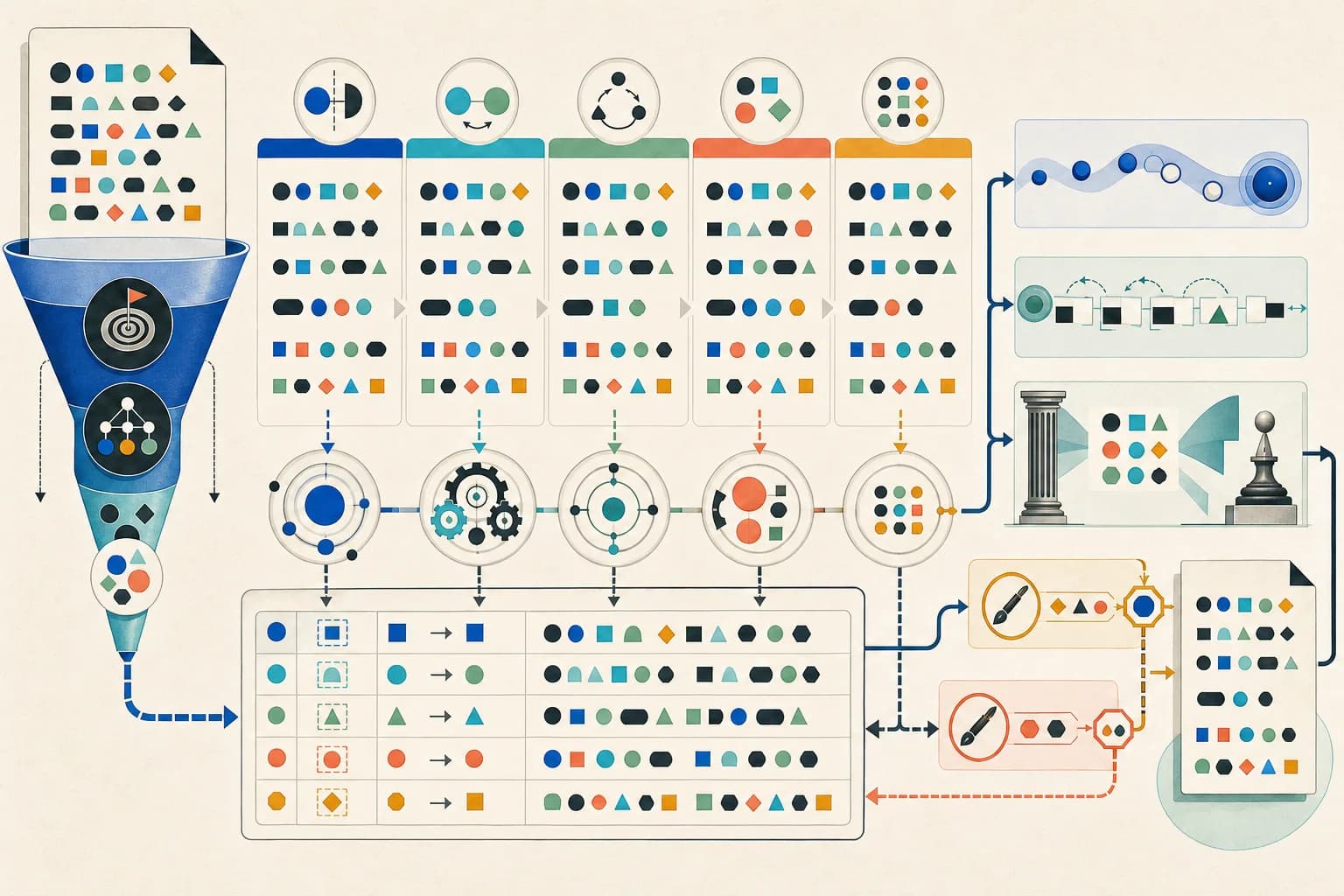
Complete the document's purpose, evidence and organization before proofreading. Save a review copy, define the language and style convention that applies, then inspect one system per pass: sentence boundaries; verbs and agreement; pronoun reference and modifier attachment; coordination and punctuation; spelling, terms and formatting. Record each issue and its rule, correct it in full context, and run a final meaning check. Read aloud and isolate sentences to interrupt familiarity. Treat grammar-tool suggestions as leads: accept a change only when you can explain the rule, confirm the intended meaning and verify that the suggestion fits the audience's language variety and house style.
Finish revision and define the convention first
Resolve the document's purpose, facts, evidence, order and paragraph logic before polishing individual sentences; otherwise later structural edits can discard the work. Make a stable review copy and identify the expected language variety, discipline, citation system and house guide. Distinguish a grammatical construction from a style preference, terminology choice or dialect feature. When a convention genuinely varies, follow the assignment or publication rule and apply that choice consistently rather than labelling another established variety incorrect.
- Confirm that every section serves the document's purpose.
- Lock verified names, numbers, quotations and technical terms.
- Record the required language variety and house guide.
- List recurring issues from earlier feedback before beginning passes.
Check sentence boundaries and clause structure
Mark each independent clause and the dependent material attached to it. Find fragments that lack a complete independent clause, fused sentences and comma splices that join independent clauses without an adequate connection. Verify that subordination expresses the intended logical relationship rather than merely making the punctuation legal. Reading backward one sentence at a time can isolate structure, while reading forward afterward restores context.
Trace verbs, agreement, reference and modifiers
Underline each finite verb and connect it to its grammatical subject, ignoring intervening phrases that can distract agreement. Check tense and aspect across the real timeline, then inspect modal force such as must, may and should. Draw a path from every pronoun to a clear antecedent, and place modifiers beside the word they actually describe. A grammatically possible pronoun or passive construction does not need replacement simply because a tool prefers another style.
Inspect coordination, punctuation and surface consistency
Compare coordinated words, phrases and clauses for parallel grammatical roles. Check punctuation by sentence structure and meaning: a comma alone cannot join two independent clauses, while a semicolon, full stop or suitable conjunction may. Then review capitalization, spelling, hyphenation, terminology, citation formatting and visual conventions. Search for the document's known variants, but use a dictionary or style guide before normalizing a form that may be valid in the chosen language variety.
Keep an issue ledger and review tool suggestions
For each issue, record the original span, error class, applicable rule, revision and verification result. Search the document for the same pattern, then re-read every changed sentence in its paragraph and compare the final document with the locked facts. Read aloud for missing words and disrupted rhythm, and perform a separate final recipient, filename and attachment check when relevant. Automated checkers can miss real-word substitutions and context, or suggest a grammatical edit that changes meaning; accept or reject each proposal deliberately and use a qualified human reviewer for high-stakes work.
Check the primary references
Check the source against the result
Original MCXAI fixture — Context note: the analysts conducted the review. Draft: After reviewing the three supplier reports, the delivery dates was still unclear. The analysts submitted their notes on Tuesday, but it contained several unlabelled estimates. The team compare the totals and approved the forecast, however the source files were not archived.
After the analysts reviewed the three supplier reports, the delivery dates were still unclear. The analysts submitted their notes on Tuesday, but the notes contained several unlabelled estimates. The team compared the totals and approved the forecast; however, the source files were not archived.
The revision supplies the documented actor for the opening modifier, makes dates agree with were, replaces the unclear singular it with the notes, aligns compared with approved and repairs the comma splice before however. It preserves the approval and archive facts and deliberately retains unlabelled as a valid spelling in the selected variety. The context, draft and correction were written for MCXAI and do not reproduce external prose.
Continue with the writing workflow
Use the Writing hub to choose a suitable local workflow. MCXAI does not currently provide a grammar checker, and its Text Summarizer cannot certify grammar, usage or house-style compliance.
Explore writing tools