
How to build a strong thesis from the evidence
Turn an assignment question into a focused, arguable and supportable claim; calibrate its scope, test alternatives and revise it against the finished paper.
A strong thesis answers the assignment's real question with a focused claim that a thoughtful reader could challenge and that the available evidence can support. It tells the reader what you conclude, how the important ideas relate and why that interpretation matters, while keeping its scope no broader than the paper's method and material. Draft it early as a working claim, test competing explanations and counterevidence, then revise it to match what the finished argument actually proves. Not every genre requires a thesis, and no universal rule demands one sentence, paragraph-one placement or exactly three reasons.
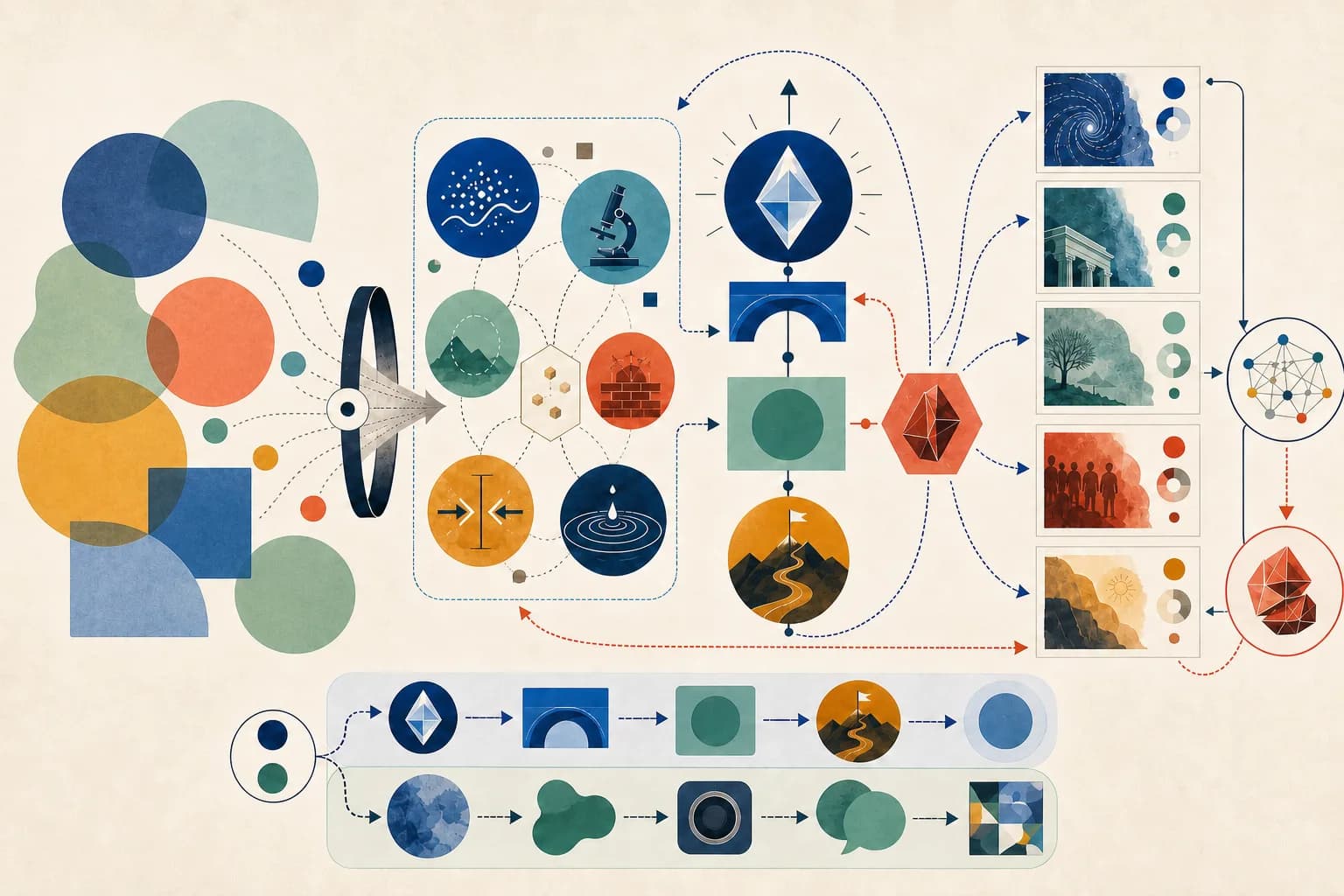
Read the assignment as a contract
Identify the requested action—analyze, compare, evaluate, explain or argue—the permitted sources, audience, length, discipline and assessment criteria. Turn the task into a question precise enough to answer. A report, reflective response, annotated bibliography or exploratory exercise may call for a purpose statement, research question or another organizing device instead; check the assignment and disciplinary conventions before forcing an argumentative thesis.
- Circle the task verb and object of analysis.
- Write the central question in your own words.
- Record the evidence and method the assignment permits.
- Define the population, period, text or case your paper can cover.
Map the evidence before choosing the claim
Record patterns, contrasts, mechanisms, uncertainties, limitations and credible alternative explanations. Separate observations from interpretations and normative recommendations. Look for a relationship the evidence makes visible, not just a subject the paper will mention. A purpose statement such as this paper examines X can help you begin, but it becomes a thesis only when it states the conclusion you reached about X.
Draft a claim with reasoning, scope and stakes
Write a provisional answer, add the reason the evidence supports it and state the consequence for the question. Name the case, population, text, period or conditions that bound the claim. This is a diagnostic scaffold, not a mandatory sentence formula: complex work may need two connected sentences, and the final wording should follow the genre. Replace empty evaluations such as important or effective with the particular relationship you will demonstrate.
Stress-test what a careful reader could dispute
Ask whether the thesis is merely a fact, a broad opinion or an assertion that requires the paper's analysis. Try the strongest plausible counterinterpretation and identify evidence that would weaken the claim. Check every causal verb against the study design: a before-and-after pattern without a comparison group does not by itself establish that the intervention caused the change. Narrow, qualify or abandon a claim when the evidence cannot carry it; complexity is useful only when each qualification has a reason.
Reverse-outline the paper and revise the promise
After drafting, write one sentence for what each paragraph actually contributes. The sequence should develop the thesis rather than repeat it, and every promised part of the thesis should receive evidence and analysis. Remove a branch the paper does not support, add a missing qualification, or revise the thesis when the evidence leads elsewhere. Read the introduction and conclusion together to check that the paper fulfills the same claim without simply copying the opening sentence.
Check the primary references
Check the source against the result
Original fictional MCXAI evidence packet — Assignment: argue what the Studio East refill-station pilot justifies. Bottle-waste audits averaged 480 single-use bottles per week during a four-week baseline and 300 per week during a six-week pilot with three refill stations. The audit included no comparison building and did not isolate the stations from other changes.
Weak — Refill stations are good for campuses. Working but overclaimed — Studio East should keep its refill stations because they reduced bottle waste. Final — The Studio East pilot provides a reason to continue testing refill access in that building, not evidence for campus-wide adoption: audited bottle waste averaged 37.5% lower during the six-week pilot, but the design lacked a comparison building and cannot isolate the stations' effect.
The final thesis makes a contestable decision claim, supplies the observed magnitude, limits the conclusion to Studio East and states the design constraint. It changes reduced to averaged lower because the packet supports an association, not causation. The assignment, figures and wording were created for MCXAI and do not reproduce an external study or source passage.
Continue with the writing workflow
Explore MCXAI's writing resources while keeping the assignment, evidence and citation record under your control. No current local tool can decide what your evidence proves or write a defensible thesis for you.
Explore writing tools