
Paraphrasing preserves detail; summarizing compresses it
Choose paraphrasing for a detailed restatement and summarizing for a shorter synthesis, then verify meaning, attribution, omissions and source-use rights.
Paraphrase when the reader needs the source passage's specific reasoning or evidence in a new voice and structure; the result is often similar in detail and length. Summarize when the reader needs the main contribution, material qualifier and consequence from a larger passage; the result is substantially shorter and deliberately omits detail. Both must preserve the source's meaning, avoid copied phrasing unless quoted, and credit the source. Citation addresses attribution, not whether a particular use of copyrighted material is legally permitted.
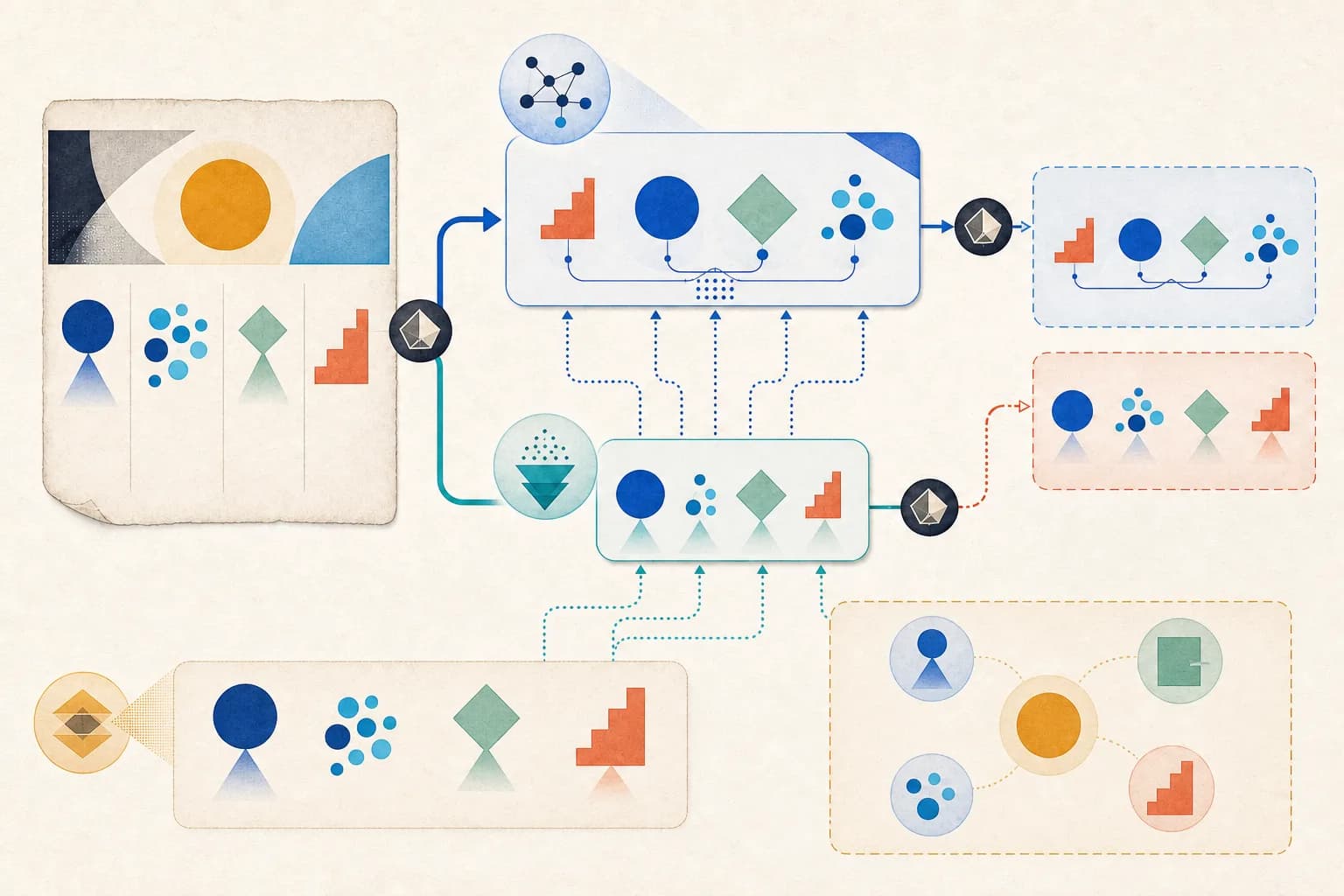
Choose the transformation the reader actually needs
Use a quotation when the exact wording is the evidence, a paraphrase when a bounded passage needs detailed restatement, and a summary when the purpose is to condense a larger contribution. Decide the destination paragraph's job before rewriting. If the new version must carry every number, condition and step, it is probably a paraphrase; if it should establish only the central finding and its important limit, it is a summary.
- Name the point the source will support in your document.
- Set the exact source span you are transforming.
- Mark details that must survive and examples that may be omitted.
- Record the required citation style and source-use status.
Understand and map the source before changing words
Read until you can explain the passage without looking at its sentences. Mark the main claim or finding, supporting evidence, assumptions or qualifiers, and the consequence or next action. Resolve unfamiliar technical terms with authoritative references or a subject expert. If you cannot state the logic accurately, quote a limited necessary passage or postpone the rewrite rather than producing a fluent misinterpretation.
Paraphrase from the meaning map, then compare
Set the source aside and rebuild the explanation from your notes for the new audience and context. Change the sentence architecture, order and emphasis where the meaning permits; do not walk through the original replacing words with synonyms. Reopen the source and check every relationship, number, attribution and qualifier. Then compare distinctive phrasing and either rewrite it, use a clearly marked quotation, or retain necessary standard terminology with citation.
Summarize proportionately and disclose material omissions
State the source's central contribution first, add the strongest evidence needed for the destination, retain any condition that changes the conclusion and include the consequence when relevant. Remove examples, repetition, procedural detail and secondary branches only after deciding they are not necessary for the reader's task. A summary must not strengthen tentative language, generalize beyond the source population or combine separate findings into a causal claim.
Credit the source and keep permission a separate review
Cite both paraphrases and summaries according to the destination's rules, and make the boundary between the source's contribution and your analysis clear. Attribution does not itself authorize every use: copyright exceptions and permissions depend on the work, purpose, amount, market effect, jurisdiction and other facts. The U.S. Copyright Office states there is no fixed word or percentage formula for fair use. Seek appropriate legal or rights-holder guidance when the intended use is uncertain.
Check the primary references
Check the source against the result
Original fictional MCXAI training passage: During a six-week accessibility review, 12 participants completed the same account-recovery task on two prototypes. The version with explicit field labels had 10 successful first attempts; the icon-only version had 6. The small sample did not include screen-reader users. The team will run an assistive-technology session before selecting the final form.
Paraphrase — In a fictional six-week comparison, 12 people tried account recovery in two designs. Ten succeeded on their first attempt with labeled fields, versus six with icons alone. Because the small group excluded screen-reader users, the team plans an assistive-technology session before choosing the form. Summary — In a fictional small test, labeled fields produced more first-attempt account-recovery completions than icon-only controls, but screen-reader testing is still needed before a design decision.
The paraphrase retains the duration, participant count, both results, sample limit and next action while changing structure and wording. The summary keeps the comparative finding, qualifier and decision gate but deliberately omits the duration and exact counts. This passage was written for MCXAI, so no third-party wording was copied; an external source would still require attribution and a separate source-use review.
Inspect a local extractive result before rewriting
The Text Summarizer selects and traces source sentences in their original wording. Use those anchors for review; it does not paraphrase, create citations or decide source-use permission.
Open Text Summarizer