
Loading
Preparing the page
Public context is loading before any interactive tool code.
Preparing the page
Public context is loading before any interactive tool code.
Validate a local event manifest, sort real ISO dates or preserve declared process order, preview an accessible SVG, and export editable Mermaid source.
Your checked result will appear here.
The manifest takes one of two explicit paths. Calendar mode validates real ISO dates and sorts them ascending; process mode retains every supplied marker in place.
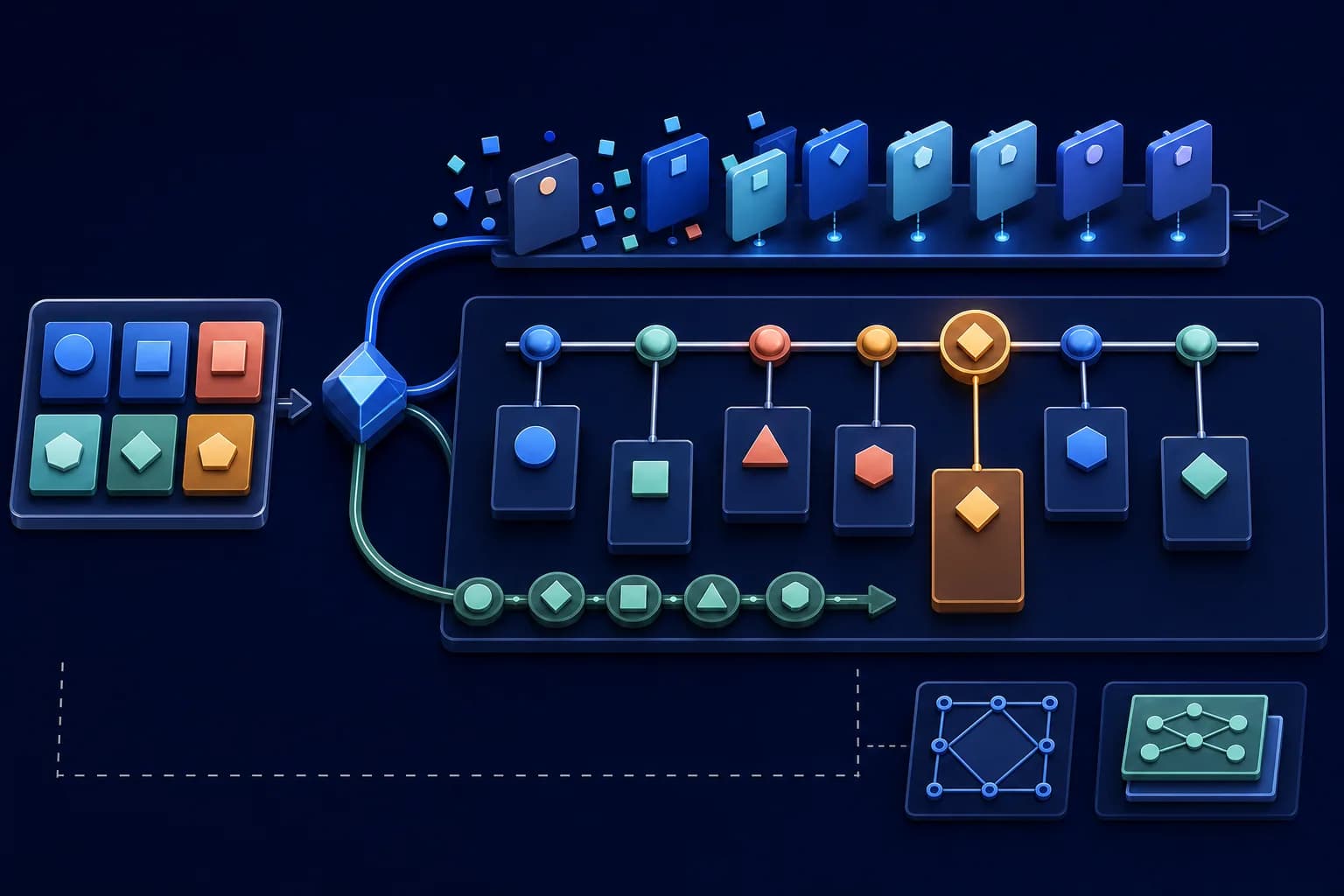
The tool structures only the supplied title, markers, details and kinds. It does not extract facts or decide what belongs in the history.
Use calendar for real YYYY-MM-DD dates or process for authored markers such as Phase one.
Give each event a marker, short title, optional detail and milestone, decision or review kind.
Calendar records sort stably by date; process records stay in their original array order.
Inspect the accessible SVG and reordering count, then download the SVG or editable Mermaid.
The tested calendar fixture deliberately begins out of order. All four records move when the dates are sorted ascending.
{
  "title": "Checkout release record",
  "mode": "calendar",
  "events": [
    { "marker": "2026-03-12", "title": "Public release", "detail": "Reviewed release enabled", "kind": "milestone" },
    { "marker": "2026-01-18", "title": "Contract review", "detail": "API fields approved", "kind": "review" },
    { "marker": "2026-02-04", "title": "Launch decision", "detail": "Evidence gate passed", "kind": "decision" },
    { "marker": "2026-02-20", "title": "Pilot evidence", "detail": "Rollback test recorded", "kind": "milestone" }
  ]
}2026-01-18 · Contract review 2026-02-04 · Launch decision 2026-02-20 · Pilot evidence 2026-03-12 · Public release
Observed: Calendar sorted · 4 events · 4 moved · 2 milestones · 1 decision · 1 review
2026-02-31The day is not real for that month, so no SVG or Mermaid is emitted.
Ordering is a declared rule, not a guess about meaning.
Requires valid four-digit-year ISO dates and sorts them ascending while preserving same-date input order.
Accepts short authored markers and retains the supplied order for phases, reviews or operating steps.
Milestone, decision and review change the marker shape; the author remains responsible for the classification.
Mermaid keeps the text outline portable, but its current timeline syntax is documented as experimental.
Every event receives the same visual interval so labels remain legible. The distance between January and February therefore looks the same as the distance between February and March.
Compare dates, names and details with the authoritative record before publication.
A tidy sequence can still be incomplete because the tool sees only the supplied manifest.
Earlier placement does not establish that one event caused the next.
Tell readers that markers are evenly spaced or use another chart when proportional duration matters.
The output is an authored visual record of the manifest, not independent evidence that any event happened.