
Loading
Preparing the page
Public context is loading before any interactive tool code.
Preparing the page
Public context is loading before any interactive tool code.
Arrange explicitly named ideas and directional phrases into one local relationship graph, with endpoint and connectivity checks plus described SVG and Mermaid exports.
Your checked result will appear here.
Unique nodes, known endpoints, non-self relationships and root connectivity are checked before a radial map is drawn. The empty amber region marks everything the manifest did not say.
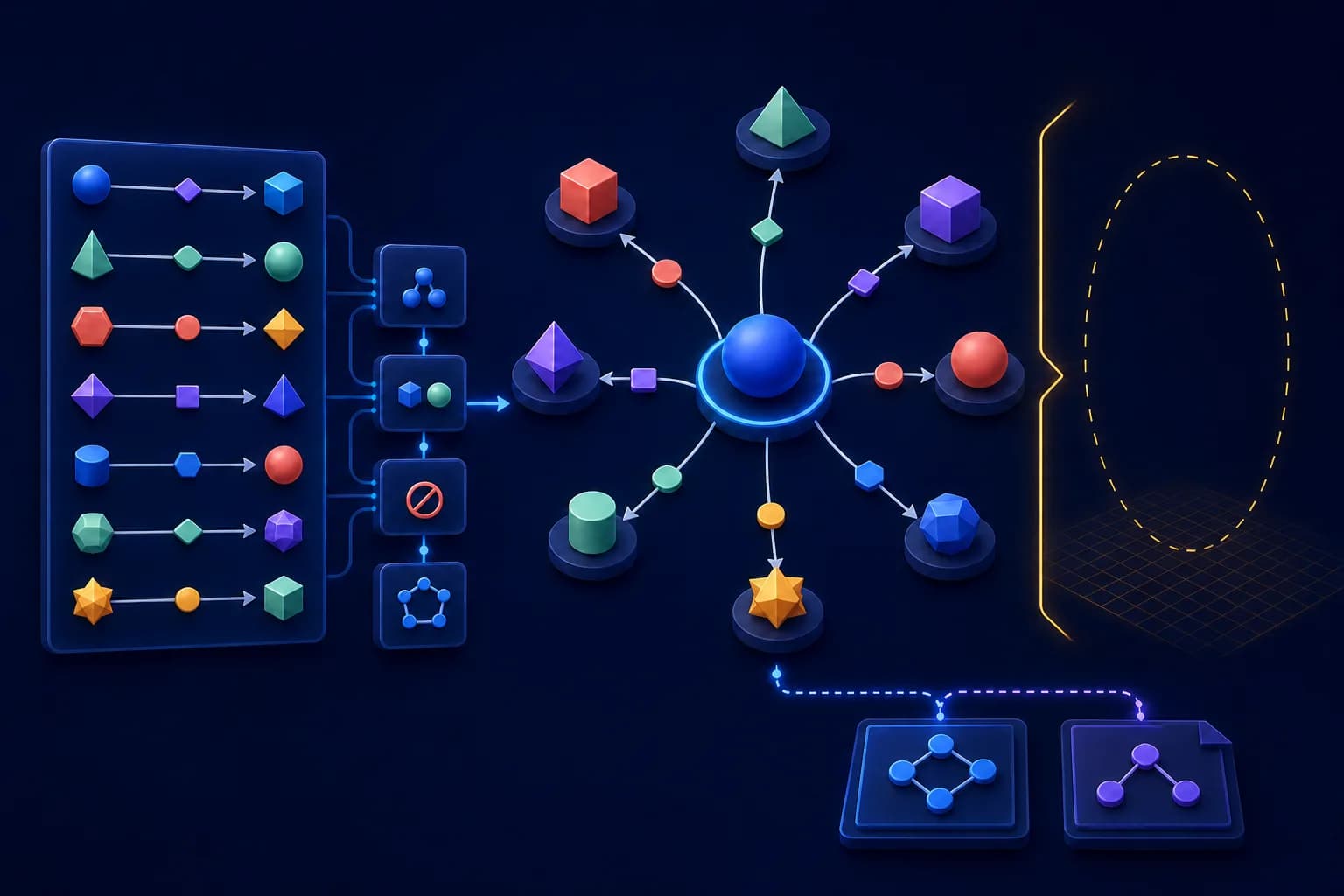
The tool never derives a link from proximity or similar wording.
Reference one declared concept as the visual center, not as an inferred parent.
Mark each record as a concept, example or question.
Supply source, target and a short phrase such as grounds, uses or challenges.
Inspect the accessible SVG, exact counts and editable Mermaid before sharing.
The shipped fixture connects source, intent, output, review and page records around one evidence-led publication root.
Verified source --grounds--> Evidence-led publication
Reader intent --focuses--> Evidence-led publication
Evidence-led publication --uses--> Tested tool output
Tested tool output --is checked by--> Is every claim supported?
Is every claim supported? --gates--> Published page
6 connected nodes
5 directed relationships
3 concepts · 2 examples · 1 question
3 root-adjacent relationships
orphan-conceptA node cannot reach the declared root, so no map is emitted.
Connectivity proves only that the manifest forms one drawable component.
Each arrow follows from to to exactly; the reverse relationship is not assumed.
The edge label is author-supplied and must be reviewed as a claim.
Central placement improves navigation but does not establish hierarchy or importance.
A connected map may omit concepts, counterexamples or competing explanations.
Use the result as an authored review artifact, never as evidence that its relationships are true.