
How to turn notes into flashcards that test recall
Map the source, write one unambiguous retrieval target per card, preserve evidence and limits, use feedback, space reviews and test transfer.
Understand and check the notes before converting them. Mark each claim, relationship, sequence, example, number and qualifier, then give each card one specific retrieval target and an answer that is minimal but complete. Write prompts that require producing or explaining the answer before it appears; attach a source locator and preserve conditions that change the claim. During review, attempt recall, reveal accurate feedback, record what failed and revisit cards across separate sessions. Adjust review timing to the learner, material and retention goal rather than treating one interval pattern as universal. Flashcards can strengthen recall, but they do not by themselves establish source accuracy, conceptual transfer or the ability to solve a new problem.
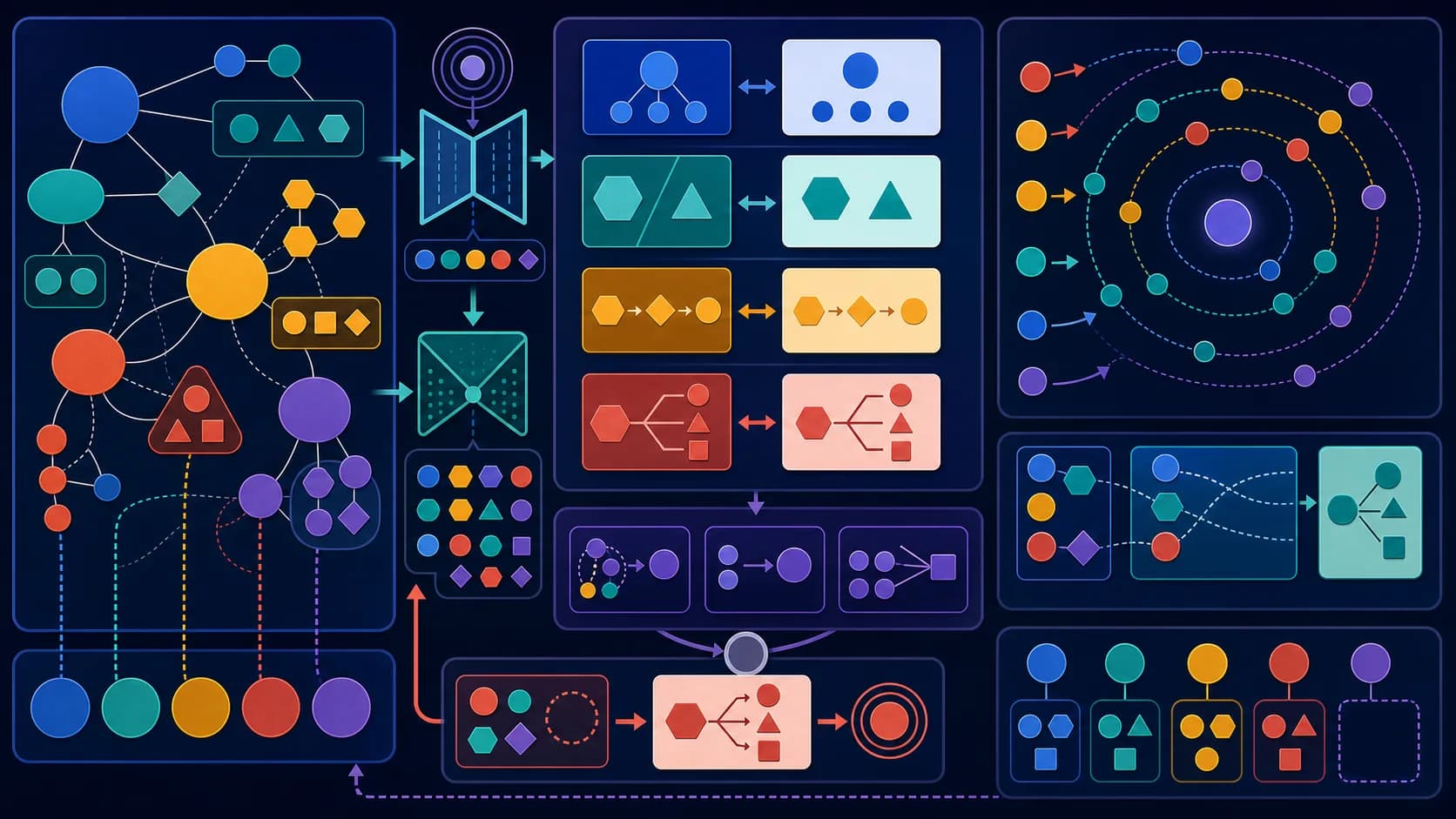
Map the source and the learning target first
Read the complete note set, resolve contradictions against the assigned source and state what the learner must later recall, explain, distinguish or apply. Mark facts, causal or noncausal relationships, sequences, formulas, examples, exceptions and uncertainty with their page, slide, timestamp or section locators. Do not make a card from a sentence you do not understand. Retrieval-practice research does not make inaccurate notes safe, and recall cards are only one part of preparation when the target task requires derivation, writing, diagnosis, physical performance or extended problem solving.
- Name the course outcome or later task.
- Create a source-backed claim and relationship inventory.
- Mark limits, units, dates and evidence locators.
- Resolve gaps before generating a confident answer.
Give each card one meaningful retrieval target
A card should ask for one coherent unit: a definition with its distinguishing feature, a contrast, an ordered sequence, a condition-and-result relationship or a small scenario decision. Split a prompt that requires several unrelated answers, but do not atomize the material into fragments that erase how ideas connect. Keep necessary qualifiers on the answer side and tag the source locator separately. Reverse a card only when recall in both directions is actually useful and each direction has one unambiguous answer; a many-to-one relationship often makes the reversed cue invalid.
Require production before recognition
Use a direct question, a completion with enough context or a scenario that asks the learner to generate an answer before seeing it. Avoid prompts such as 'What about this topic?', copied headings, yes-or-no cues and fronts that reveal the answer through wording or layout. Definition cards alone do not test discrimination or application, so add contrast and scenario cards where the learning target requires them. The 2008 Karpicke and Roediger experiment found a delayed-recall benefit from repeated retrieval in its foreign-language-pair task; it does not prove that every card design or subject transfers automatically.
Reveal accurate feedback and diagnose the miss
After a genuine attempt, reveal the source-backed answer and compare required parts rather than grading on familiarity. Mark whether the response was correct, incomplete, confidently wrong or blocked by an ambiguous cue. Correct the source record or card immediately when the key is wrong. Feedback research has found benefits under particular testing conditions, including for some low-confidence correct answers, but a colored rating button is not evidence that understanding changed. Repeated failure can mean the card is too broad, the cue is weak or the underlying idea needs restudy—not merely that the interval should become shorter.
Space retrieval, mix decisions and audit transfer
Revisit cards across separate sessions and let observed recall plus the real retention goal influence the next review. Cepeda and colleagues found that the effective study gap varied with the final test delay in their fact-learning experiment, so a fixed daily pattern should not be marketed as universally optimal. Mix related concepts when the learner must choose among them, and periodically answer a new scenario that combines several cards without showing their labels. Audit source coverage, duplicate cards, cue ambiguity, accessibility and stale versions. Keep text available to screen readers, do not encode the answer only with color, and treat a successful card deck as retrieval evidence—not proof of broad mastery.
Check the primary references
Check the source against the result
Original fictional MCXAI note set — In the Meridian greenhouse, observers recorded 48 visits by fictional Luma moths across four mornings. Thirty-six visits occurred during the first hour after sunrise. The temperature was held at 24 °C. The observation covered one greenhouse and did not test whether time of day caused the visits or whether the pattern applies in other settings.
Card A — Prompt: What share of recorded visits occurred in the first hour after sunrise? Answer: 36 of 48, or 75%; source: sentence two. Card B — Prompt: Which conditions limit this observation? Answer: Four mornings, one greenhouse and a held temperature of 24 °C; source: sentences one, three and four. Card C — Prompt: What conclusion is supported? Answer: In this fictional observation, most recorded visits occurred in the first hour after sunrise. The notes do not establish that time caused the pattern or that it generalizes elsewhere; source: sentences two and four. Transfer check — Prompt: May this note support 'Luma moths always prefer the first hour after sunrise'? Answer: No; always, preference and wider generalization exceed the observed counts and stated scope.
The cards retain 48 visits, 36 first-hour visits, four mornings, 24 °C, the single-greenhouse scope and both causal and generalization limits. The 75% value is shown as a direct calculation from 36 ÷ 48, while the transfer prompt tests claim boundaries rather than adding a biological fact. Luma moths, the greenhouse and all note wording are fictional MCXAI material and do not reproduce a third-party lesson or dataset.
Map relationships before splitting them into cards
The browser-local Concept Map Generator can organize concepts and evidence links from a structured brief. It does not create flashcards, judge source accuracy or schedule retrieval practice.
Open Concept Map Generator