
Why AI detector flags can be wrong
See how overlap, short inputs, population and domain shift, mixed editing, thresholds, base rates and version drift create false flags or missed AI text.
AI detector flags can be wrong because human and model-generated writing distributions overlap, while the tested population rarely matches every real input. Short or highly constrained text supplies less distinguishing evidence; language, genre, subject and writer population can be underrepresented; new generators and detector versions move the boundary; mixed human–tool editing and transformations blur the original signal; and threshold plus base-rate choices determine which errors surface. A false positive labels human work as AI-like, while a false negative misses model-generated work. Neither is solved by confidence formatting. Preserve a disputed report's exact tool, version, threshold and input conditions, then review drafts, sources, permitted assistance, process history and the writer's explanation under a published policy with an appeal route.
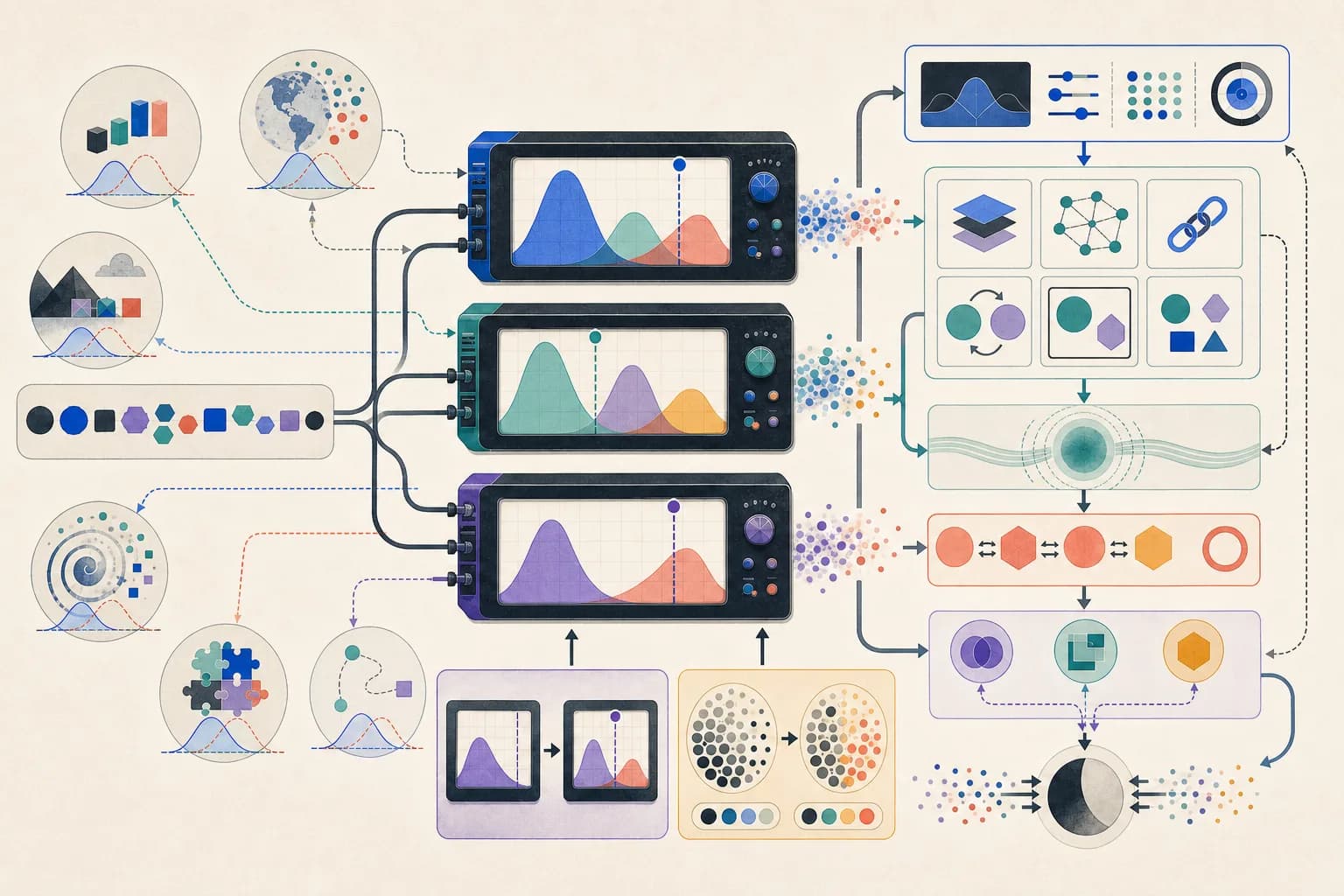
False positives begin with overlapping populations
A detector learns proxies that separate selected examples, not an essence of human authorship. Human writing can share regular vocabulary, syntax or structure with model output, especially in constrained assignments, formulaic professional genres or second-language contexts. A threshold placed over overlapping scores necessarily assigns some human texts to the flagged side. The number of resulting false accusations also depends on the real base rate: when prohibited use is uncommon, a modest false-positive rate can supply a large share of all flags.
False negatives grow when the target moves
Model families, prompting strategies and decoding settings change the distribution a detector must recognize. Human revision, permitted assistance, translation and other transformations can remove signals the system learned, while a new or unrepresented generator may never have supplied training examples. This explains a missed detection but does not make evasion advice appropriate: institutions should evaluate realistic transformations and provenance controls rather than ask people to rewrite toward or away from a secret score.
Length, language, domain and version constrain transfer
Check the minimum qualifying length, supported language, expected genre and evaluation population before interpreting a result. Short samples have fewer observations and predictable passages can have similar form regardless of origin. Subgroup performance matters because a single aggregate metric can hide concentrated false positives. Detector updates can change outputs without changing the document, so preserve the model version and do not compare reports from different releases as though the scale were stable.
Diagnose the report before diagnosing the writer
Save the submitted file, exact analyzed span, report, timestamp, detector version, threshold or category, file-processing warnings and stated limitations. Confirm that the input met supported conditions and whether quoted, template or reference material was included. Reproduce only through an approved documented process; repeatedly trying public checkers adds privacy exposure and incompatible, uncalibrated outputs. Disagreement between tools is evidence of measurement uncertainty, not a voting system.
- Pause any automatic penalty and preserve the original state.
- Check supported language, length, file type and qualifying text.
- Compare the flag with the relevant assignment and allowed-use policy.
- Collect drafts, sources and version history without demanding unrelated private data.
Use proportionate evidence, response and appeal
Tell the writer what evidence is being considered, allow them to explain their process and assess drafts, citation trails, notes, version history and subject understanding. Such records are contextual evidence, not automatic proof either way. Separate a prohibited generated passage from permitted spelling, accessibility or translation assistance, and apply the rule that existed when the work was submitted. A trained reviewer should document the reasoning and uncertainty, avoid adverse action based only on a detector, and provide an independent appeal path. Do not require a writer to make prose less fluent, more idiosyncratic or artificially error-filled to satisfy a classifier.
Check the primary references
Check the source against the result
Original fictional MCXAI case — Noor submits a 420-word reflective lab memo. Hypothetical Detector A is configured and evaluated for essays of at least 800 words but is run anyway and returns a high-risk category. Detector B does not flag the same text. After Detector A receives a scheduled model update, the unchanged memo returns an inconclusive category. Noor has five timestamped drafts across three days, source annotations created before submission and a citation trail. The course policy allowed spelling and grammar checkers but prohibited generated prose.
Review record — The first report violated Detector A's stated length condition; two systems disagreed; and one system changed category after a version update although the memo did not change. The reviewer preserves all three reports, checks the draft sequence and sources, discusses the writing process with Noor, applies the submitted-date policy and offers independent appeal. The detector flag alone is recorded as insufficient for an adverse finding; any conclusion must rest on the complete documented evidence.
The case does not treat detector disagreement as proof that Noor wrote the memo, and the draft history does not automatically exclude tool use. It shows why unsupported input conditions and version instability weaken the flag, while multiple process records and a response opportunity provide more relevant context. The case, tools and records are fictional and were written for MCXAI.
Understand the score before reviewing a dispute
Read the companion mechanics guide for classifiers, thresholds, confusion matrices, base rates, generator traces and provenance. Neither guide supplies an authorship detector or misconduct verdict.
Read how AI detectors work