
Loading
Preparing the page
Public context is loading before any interactive tool code.
Preparing the page
Public context is loading before any interactive tool code.
Provide a project name, description, features, commands and license, then generate a structured Markdown README locally without invented badges or claims.
Your checked result will appear here.
Name, purpose, features, installation, usage and license remain separate inputs until they pass the outline. The resulting README never needs filler to look complete.
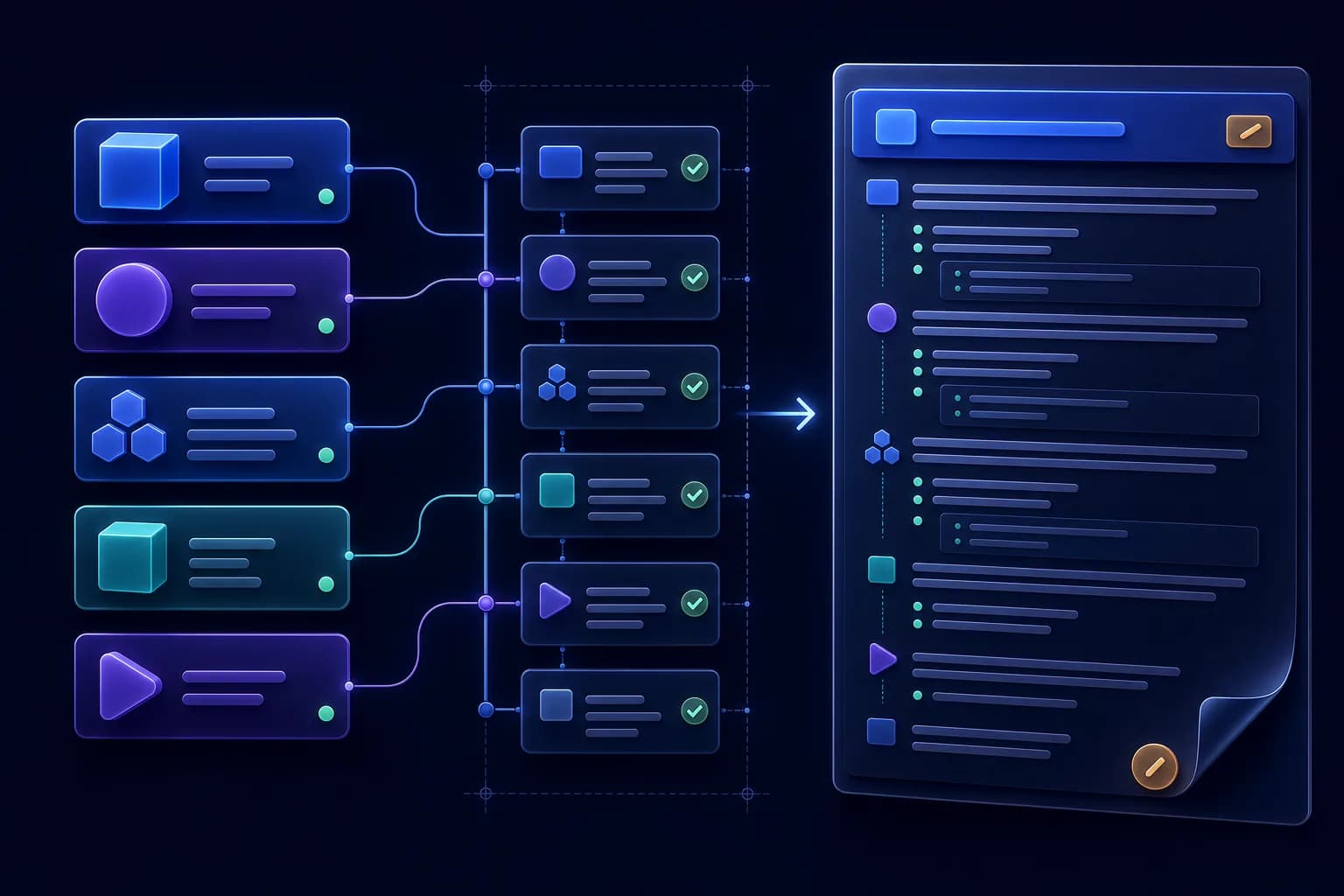
The tool supplies Markdown structure and predictable spacing. The project claims, commands and license remain the author's responsibility.
The brief must contain a usable name, description, feature list, installation command, usage command and license statement.
Features, Installation, Usage and License appear in a fixed order beneath the title and description.
Installation and usage lines use indented Markdown code blocks, including when a command spans more than one line.
Copy the result or download README.md, then add only project details you can verify.
This tested fixture demonstrates the entire transformation. No badge, contributor, compatibility statement or support promise appears because none was supplied.
{
  "name": "Atlas Sync",
  "description": "Synchronizes reviewed records between two test systems.",
  "features": [
    "Validates each source record",
    "Reports rejected rows"
  ],
  "installation": "npm install",
  "usage": "npm run sync -- --dry-run",
  "license": "MIT"
}# Atlas Sync
Synchronizes reviewed records between two test systems.
## Features
- Validates each source record
- Reports rejected rows
## Installation
npm install
## Usage
npm run sync -- --dry-run
## License
MIT{"name":"Atlas Sync"}A title alone cannot support installation, usage or license sections, so the builder stops.
The draft is a starting document, not evidence that commands work or that a license was legally selected.
Run the installation and usage steps from a clean checkout in a supported environment.
Add runtime versions, system packages, accounts or environment variables that a new contributor genuinely needs.
Remove internal hosts, private package names, credentials and architecture details that should not be published.
Confirm that the named license matches the repository's actual license file and the owner's decision.
A useful README depends on tested commands and accurate boundaries. The generator refuses to disguise missing facts with generic praise.